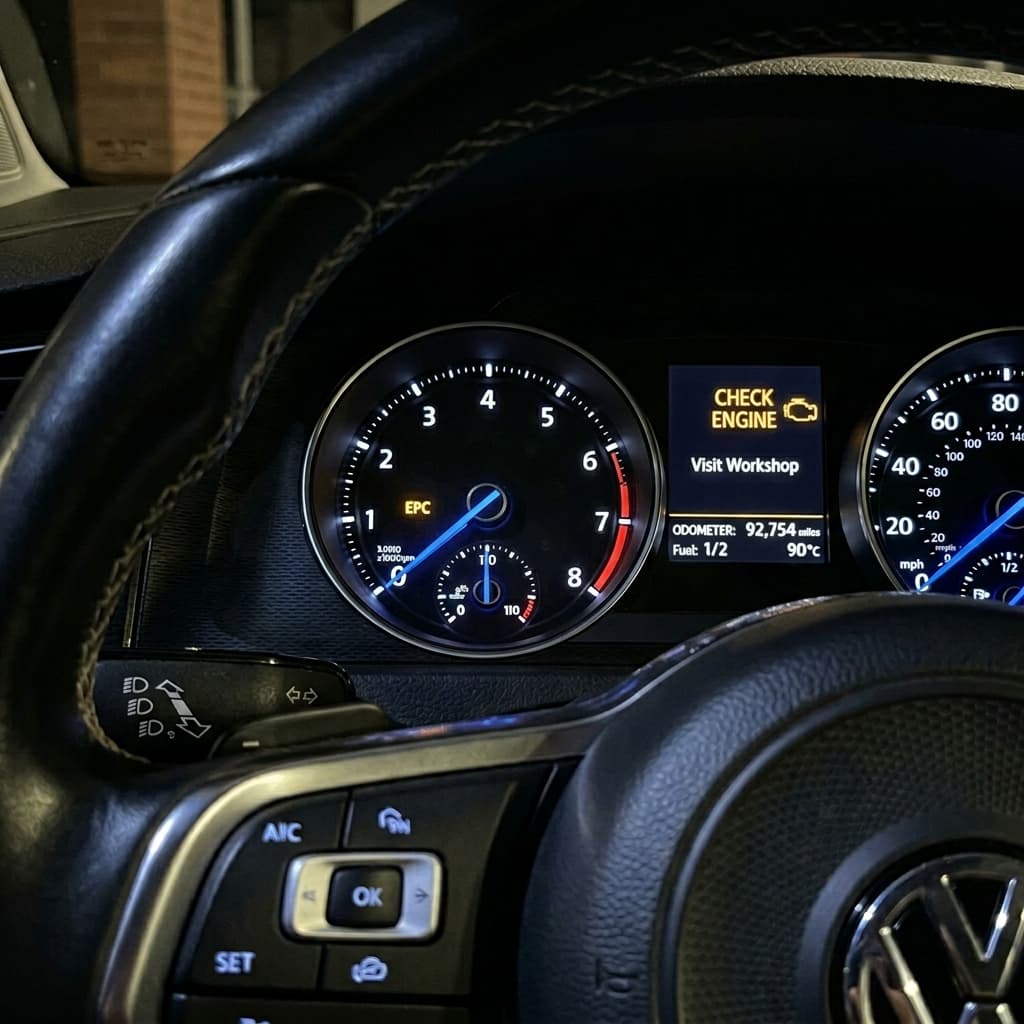
It is a moment every driver dreads: you are driving along normally, and suddenly, a little yellow engine-shaped symbol illuminates on your dashboard. The Engine Management Light (EML) is your car’s way of telling you that the onboard computer has detected a fault.
While it can be alarming, it doesn't always mean your engine is about to fail. It can be triggered by something as minor as a loose sensor or as serious as a failing catalytic converter. Here are the most common causes and exactly what you should do when that light appears.
1Oxygen (O2) Sensor Failure
Your car's oxygen sensor measures the amount of unburnt oxygen in the exhaust. The engine's computer uses this data to adjust the air-to-fuel ratio. Over time, these sensors can become covered in oil ash and fail. A faulty O2 sensor will not only trigger the EML but can also significantly reduce your fuel economy.
2Mass Airflow (MAF) Sensor Issues
The MAF sensor tells your car's computer exactly how much air is entering the engine, allowing it to add the correct amount of fuel. If this sensor fails or gets dirty, your car might experience a rough idle, sudden stalling, or a noticeable drop in performance, prompting the warning light to switch on.
3Spark Plugs and Ignition Coils (Petrol Cars)
In petrol vehicles, the ignition coil generates the electricity needed for the spark plugs to ignite the fuel. If a spark plug is worn out or a coil pack fails, the engine will "misfire." This often feels like a heavy judder or hesitation when accelerating, and the engine management light will almost certainly illuminate.
4DPF Blockages (Diesel Cars)
Modern diesel cars are fitted with a Diesel Particulate Filter (DPF) to capture harmful soot. If you only do short journeys around town, the exhaust doesn't get hot enough to burn this soot away, leading to a blockage. A blocked DPF will trigger the EML and often send the car into "limp mode" to prevent further damage.
5Solid vs. Flashing Warning Lights
Solid Amber Light: The engine is running with a fault. It is usually safe to drive home or straight to a garage, but you should have it checked as soon as possible.
Flashing Amber or Red Light: This indicates a severe engine misfire or critical fault that is dumping unburnt fuel into the exhaust, which can rapidly destroy your catalytic converter. You should safely pull over and stop driving immediately.
Why you need a proper diagnostic check
Guessing the problem can lead to replacing expensive parts unnecessarily. When the EML comes on, the car's computer logs a specific fault code. A professional diagnostic check uses specialist equipment to read these codes, allowing mechanics to pinpoint the exact issue quickly and accurately.