FAQs
Getting the best performance out of your vehicle, manual or automatic.
Common Questions
How often should I service my car?
We recommend following the manufacturer's service schedule, typically every 12 months or 10,000–12,000 miles. Regular servicing helps maintain reliability, performance and resale value.
What is included in a standard car service?
We offer two servicing options, an interim (small) or a full service (major). A small service includes an oil change, oil filter and pollen filter replacement. A full service includes oil change, oil filter, pollen filter, fuel filter, air filter, spark plugs. Both services also include fluid level checks and general vehicle health check, such as brakes, tyres and general wear and tear.
Why is my engine management light on?
The engine management light can indicate a wide range of faults, from minor sensor issues to more serious engine or emissions-related problems. Diagnostic testing is required to identify the cause accurately.
My car is making a knocking or rattling noise. What should I do?
Unusual noises can be caused by worn suspension components, engine issues, exhaust problems or loose parts. We recommend having the vehicle inspected as soon as possible to prevent further damage.
Why are my brakes making a squealing noise?
Brake squeal is often caused by worn brake pads, brake dust build-up or glazed braking surfaces. An inspection will determine whether replacement parts are required.
How often should brake fluid be changed?
Most manufacturers recommend changing brake fluid every two years. Fresh brake fluid helps maintain braking performance and prevents corrosion within the braking system.
Why is my car pulling to one side when driving?
This can be caused by incorrect wheel alignment, uneven tyre wear, suspension issues or braking faults. A professional inspection will identify the underlying cause.
My battery keeps going flat. What could be causing this?
A failing battery, faulty alternator or an electrical drain can all cause battery problems. We can carry out testing to identify the source of the fault.
What do I do if a transmission warning light appears on the dashboard?
This indicates that there is a transmission fault detected by the vehicle's control system. Diagnostic trouble codes should be read to determine the cause of the problem.
My vehicle does not have a transmission dipstick?
Many modern vehicles do not have transmission dipsticks. Oil level checks must be carried out underneath the vehicle at the correct operating temperature. We are happy to perform a gearbox oil level check free of charge.
My vehicle seems to be stuck in 2nd or 3rd gear?
This is commonly known as 'limp mode'. It is a protective setting activated when a transmission fault is detected. Diagnostics are required to identify the cause.
Do you recommend that I have my automatic gearbox serviced?
Yes. Regular gearbox servicing can significantly improve reliability and longevity. Replacing worn transmission fluid and filters helps maintain smooth operation and prevent costly repairs.
My car is juddering at certain speeds, similar to driving over a cattle grid. Could this be a gearbox problem?
This may be caused by the torque converter clutch engaging incorrectly, which is a common automatic gearbox fault. A road test and diagnostic inspection can confirm the issue.
Why is my automatic gearbox changing gear harshly?
Harsh gear changes can be caused by degraded transmission fluid, valve body faults, worn components or electronic control issues. Diagnostic testing is recommended.
My gearbox is slipping between gears. What does this mean?
Gearbox slipping can occur when the transmission struggles to engage or maintain a gear. Common causes include low fluid levels, internal wear or hydraulic pressure problems.
Can low gearbox oil cause transmission problems?
Yes. Low transmission fluid levels can lead to slipping, overheating, delayed gear engagement and internal component damage. Fluid levels should be checked as soon as possible.
Why does my gearbox hesitate before selecting Drive or Reverse?
Delayed engagement can indicate low fluid levels, internal wear, valve body issues or hydraulic pressure faults within the transmission.
What are the signs that my automatic gearbox needs attention?
Common symptoms include warning lights, slipping gears, delayed engagement, unusual noises, vibration, fluid leaks or harsh gear changes.
Can you diagnose gearbox faults before recommending repairs?
Yes. We carry out diagnostic testing, road testing and inspections to accurately identify faults before recommending the most appropriate repair solution.
Do you repair DSG, CVT and dual-clutch transmissions?
Yes. We work on a wide range of automatic transmission systems including traditional automatics, DSG, CVT and dual-clutch gearboxes.
How long does an automatic gearbox repair take?
Repair times vary depending on the fault and parts availability. Following diagnosis, we will provide an estimated timescale and keep you informed throughout the repair process.
Is it safe to continue driving with a gearbox fault?
We would generally advise against prolonged driving with a gearbox fault, as this can lead to further damage and significantly increase repair costs.
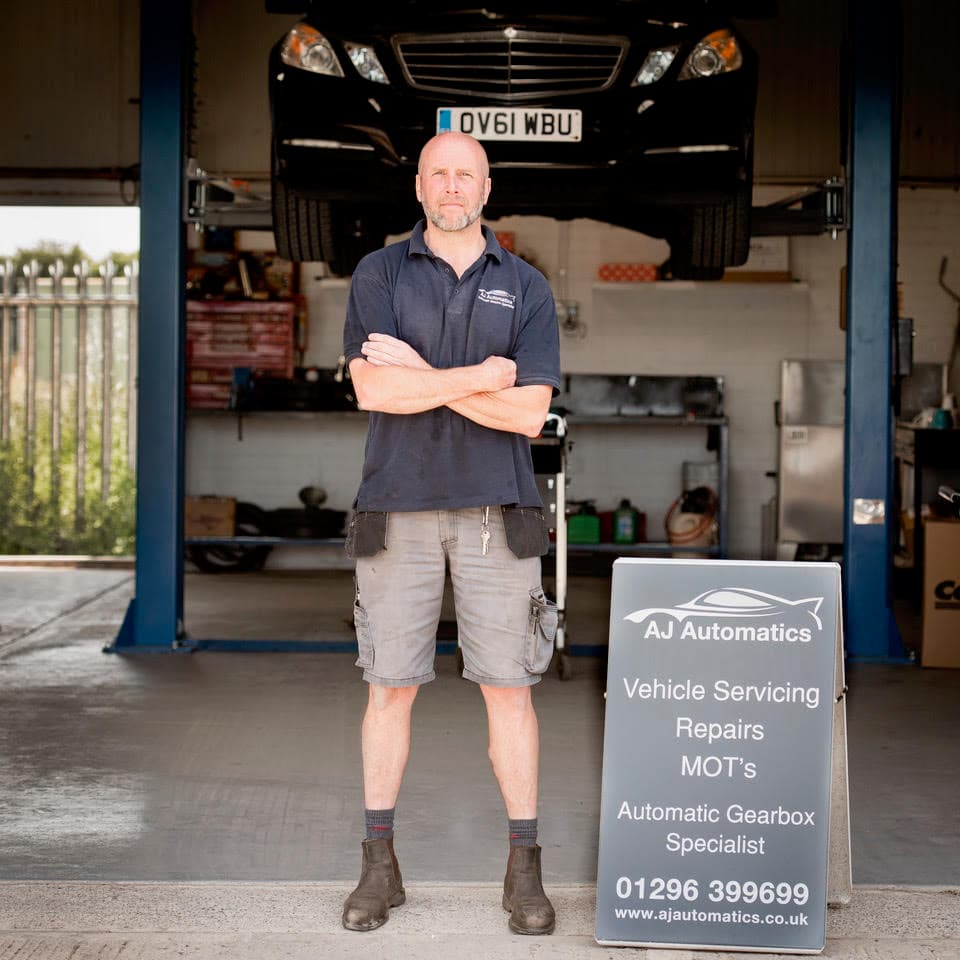
Still have questions?
Free, honest advice is offered, with no obligation. Contact us today.
Customer Reviews
"Very professional, helpful and friendly. I had a problem with my Honda Jazz juddering and had a few people try sort the problem out which was unsuccessful and Tony managed to sort the problem out instantly. High recommend. Many thanks again."
Miss K Rademeyer
Hemel Hempstead
"Great and friendly service from Tony and his team. Good prices and quick work. I even got a small torch for my car key ring! What's not to like? I'd definitely recommend AJ Automatics."
Mrs S Chapman
Aylesbury